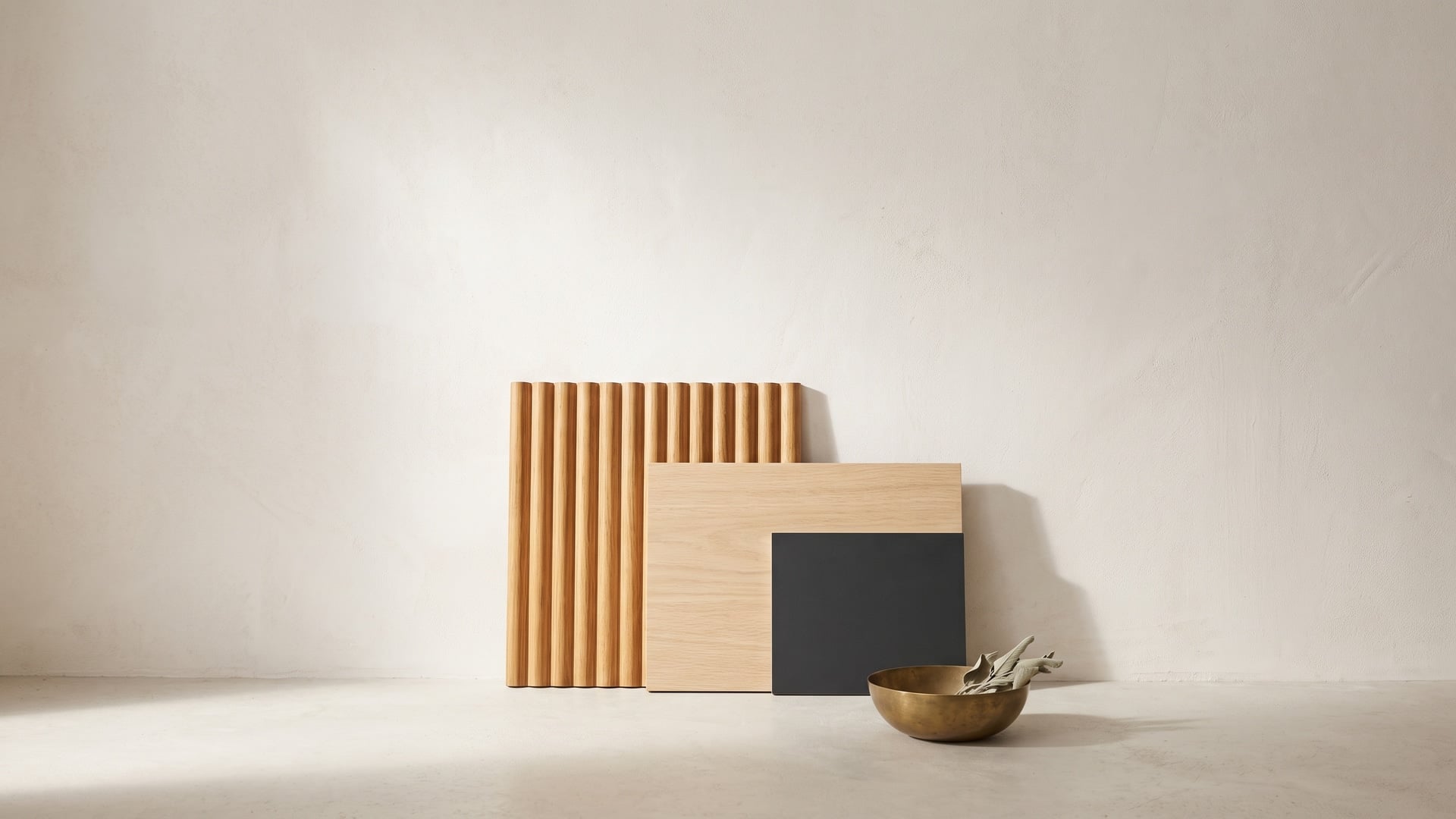
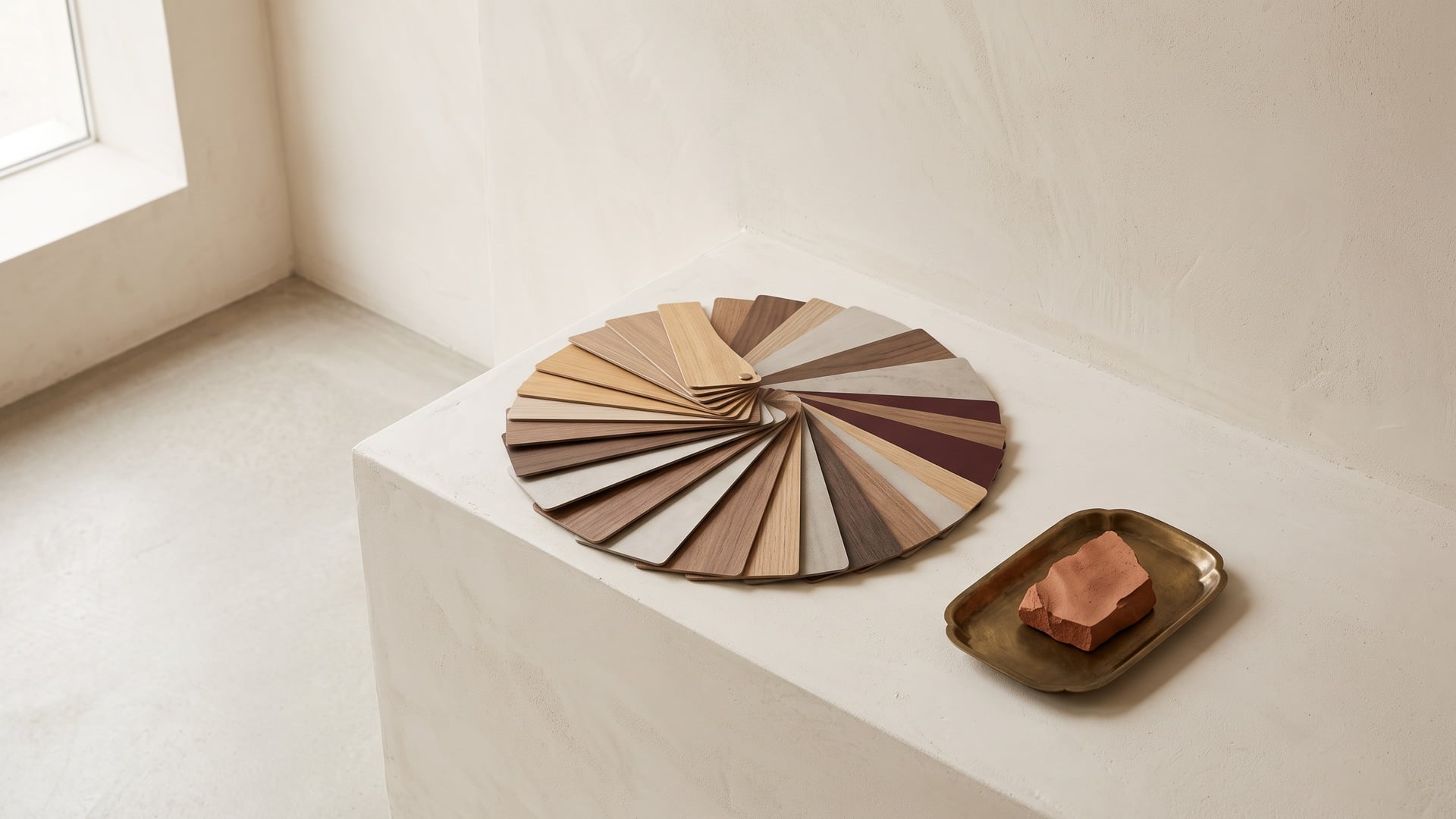
Lay two laminate samples side by side in a showroom booklet and they can be almost impossible to tell apart. Same colour, same neat rectangular chip, often the same shelf and a similar price. Yet glue those two sheets onto a wardrobe and a kitchen worktop, live with them through five years of Indian summers and monsoons, and they can age into completely different surfaces — one still crisp, the other scratched, lifted at an edge or faded along the window side. The sample book, for all its usefulness, shows you almost none of what actually decides that outcome.
That is because a four-inch chip reveals only the top skin of a laminate — its colour and its finish — and hides the four things that genuinely vary from one sheet to the next: how thick it is, how the finish behaves under hands and light, what the surface is built to resist, and how well it will be stuck down. This guide walks through each of those in turn, and does the more useful job of saying where the money is well spent and where it is quietly wasted. A laminate is not chosen the way you choose a paint colour. It is chosen the way you would choose a work boot — for the job first, and the look second.
Why two near-identical sheets behave so differently
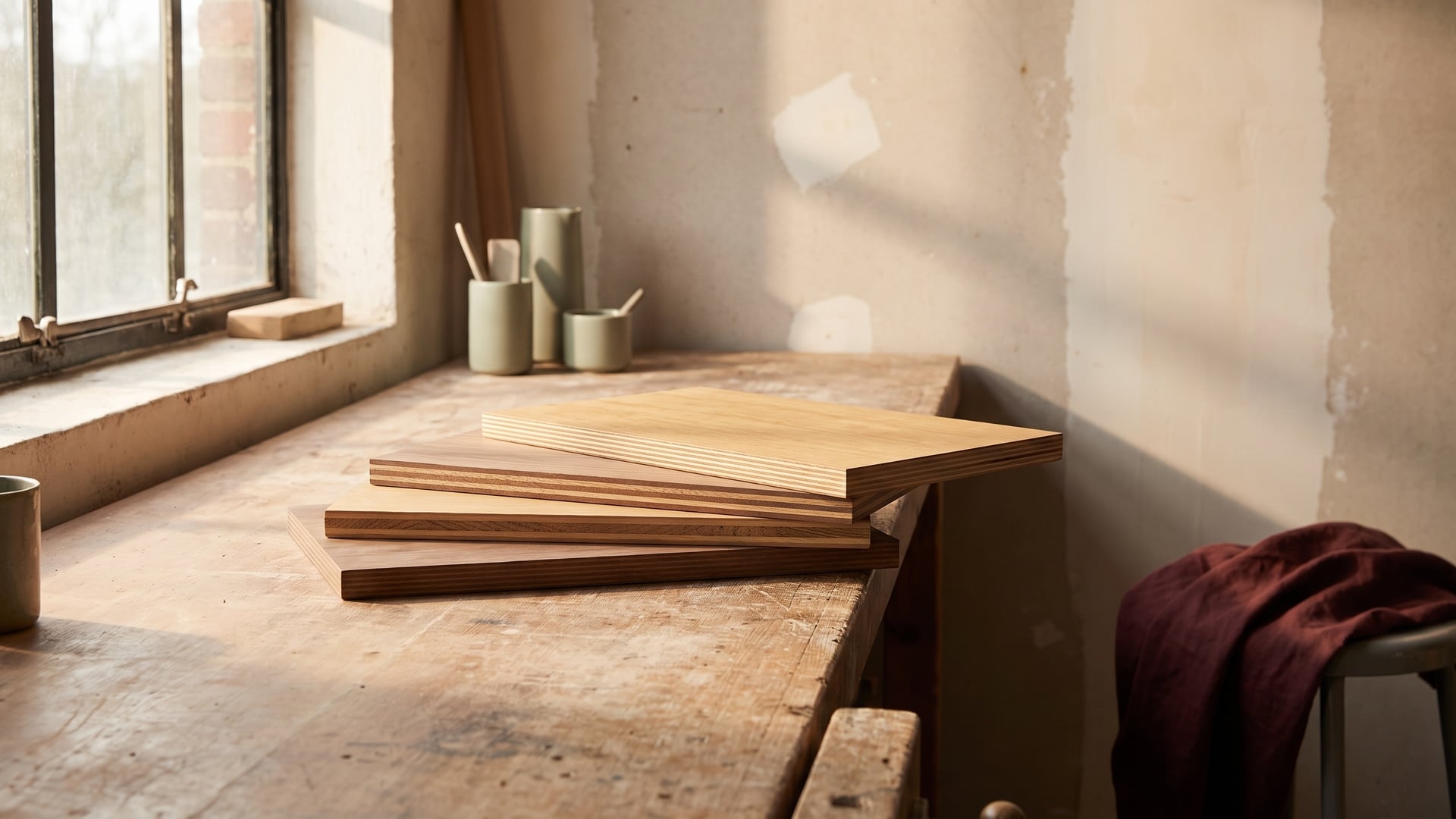
It helps to know what a decorative laminate actually is. A high-pressure laminate — HPL, the material most people mean by “laminate” — is built from several layers of kraft paper soaked in phenolic resin, topped with a printed decorative sheet and a clear protective overlay, then fused into a single hard sheet under real heat and pressure. In India the relevant benchmark is IS:2046, the standard for this kind of decorative laminated sheet. The décor you choose in the booklet is genuinely only the top fraction of a millimetre of all that.
Which is exactly why the chip misleads. It shows you the printed grain and the surface sheen and nothing beneath them — not how many kraft layers give the sheet its body, not how the finish will read under a bright kitchen light or a greasy thumb, not what it resists, and certainly not how carefully it will be bonded to the panel on site. Two sheets that photograph identically can differ on every one of those counts. So rather than choose by the chip alone, it pays to choose along the four axes the chip cannot show — thickness, finish, performance and adhesive.
You will also hear laminates spoken of in grades — general-purpose, heavy-duty, post-forming, compact, exterior, fire-retardant — but a grade is simply shorthand for a particular bundle of those same four axes, tuned for a particular use. Understand the axes and the grades explain themselves.
Thickness is a structural decision, not a number
Thickness is the most misunderstood figure on a laminate. It is tempting to read it as a grade of quality — thicker is better — when it is really a description of duty. More thickness means more resin-bonded core beneath the décor, which means more punishment the surface can absorb before it wears through, chips, or telegraphs the ridge of a joint below. The trick is to match that duty to what the surface will actually endure, which comes down first to whether it stands up or lies flat.
A surface you look at and occasionally touch does not need what a surface you work on does:
- About 1 mm — standard laminate, for vertical surfaces. Wardrobe shutters, cabinet fronts and wall panelling are seen and handled but never worked on. A standard sheet of roughly a millimetre is entirely sufficient here; paying for a heavier grade on a wardrobe door buys resistance the door will never be asked for.
- Around 1.5 mm and above — heavy-duty, for high-wear horizontals. Kitchen worktops, dining and centre tables, study desks and reception counters take knives, dragged vessels, hot pans, elbows and weight all day. The extra body resists impact and heat and postpones the day the surface wears through — this is the one place thickness earns every rupee.
- Compact and exterior grade — for wet or outdoor use. Compact laminate is a thick, self-supporting sheet that needs no plywood behind it, so it suits bathroom cubicles, lockers, laboratory tops, and balcony or façade work — anywhere a timber substrate would swell or rot, or simply isn't practical. Exterior grades add the UV and weather resistance that outdoor life demands.
One quiet detail belongs here, because leaving it out is a common false economy. A panel faced with laminate on one side only tends to bow, because the sheet shrinks and pulls as it cures while the bare reverse does not. The remedy is a thin balancing or backing laminate on the unseen back face, which pulls equally the other way and holds the door flat. It is cheap, it is invisible, and skipping it to save a single sheet is how a crisp new wardrobe shutter develops a gentle warp within a season.
Finish is a decision, not a detail
Finish changes daily life far more than colour does. The same charcoal in high gloss and in super-matte are, in practice, two different surfaces to own — one a mirror, one a soft, chalky plane — and the choice between them decides how the surface reads under your lights and how often you will be wiping it. It deserves as much thought as the colour it wears.
- Gloss. Dramatic and deep — it makes colours pop, throws light around and can make a small room feel larger. The price is honesty about smudges: a glossy surface behaves like a mirror, so every fingerprint, water spot and fine scratch shows, and shows worst on dark shades in a bright, sunlit Indian kitchen.
- Matte and super-matte. Calmer, low-glare and far more forgiving. The micro-textured surface scatters light instead of reflecting it, so marks and minor scratches simply do not register the way they do on gloss. This is the sober, liveable default for most high-touch joinery.
- Textured and synchronised finishes. Here the surface emboss is registered to the printed grain, so a woodgrain laminate not only looks like timber but feels like it — the pores and grooves fall exactly where the eye expects them. It is what separates a convincing woodgrain or stone from a flat printed picture of one.
- Anti-fingerprint. A genuine upgrade, but a targeted one. It earns its premium on dark colours and on handle-free, push-to-open joinery, where hands land straight on the shutter and every print would otherwise show. On pale shades and on fronts with handles, where marks barely register anyway, it is a feature you can happily forgo.
Performance you cannot see in a chip
Beyond how it looks, a laminate can be built to resist the specific things that will attack it — and this is where matching feature to use saves real money, because no single sheet needs every property, and paying for all of them everywhere is simply waste. The properties worth knowing:
- Scratch and abrasion resistance for surfaces that meet keys, toys, crockery and dragged objects — a child's study table or a busy worktop.
- Stain resistance for anywhere Indian cooking lands: haldi, oil, tea and masala lift far more easily from a well-sealed surface than a porous one.
- Heat resistance for worktops beside the hob, where a hot kadhai or a pressure cooker straight off the flame will find any weakness.
- UV resistance for anything in strong daylight — a window-side panel, a balcony surface, a façade — so the colour does not fade unevenly on the sunlit side over the years.
- Anti-bacterial and fire-retardant grades for the places that genuinely call for them: clinics, kitchens and food areas for the first; kitchens, commercial fit-outs, corridors and escape routes for the second.
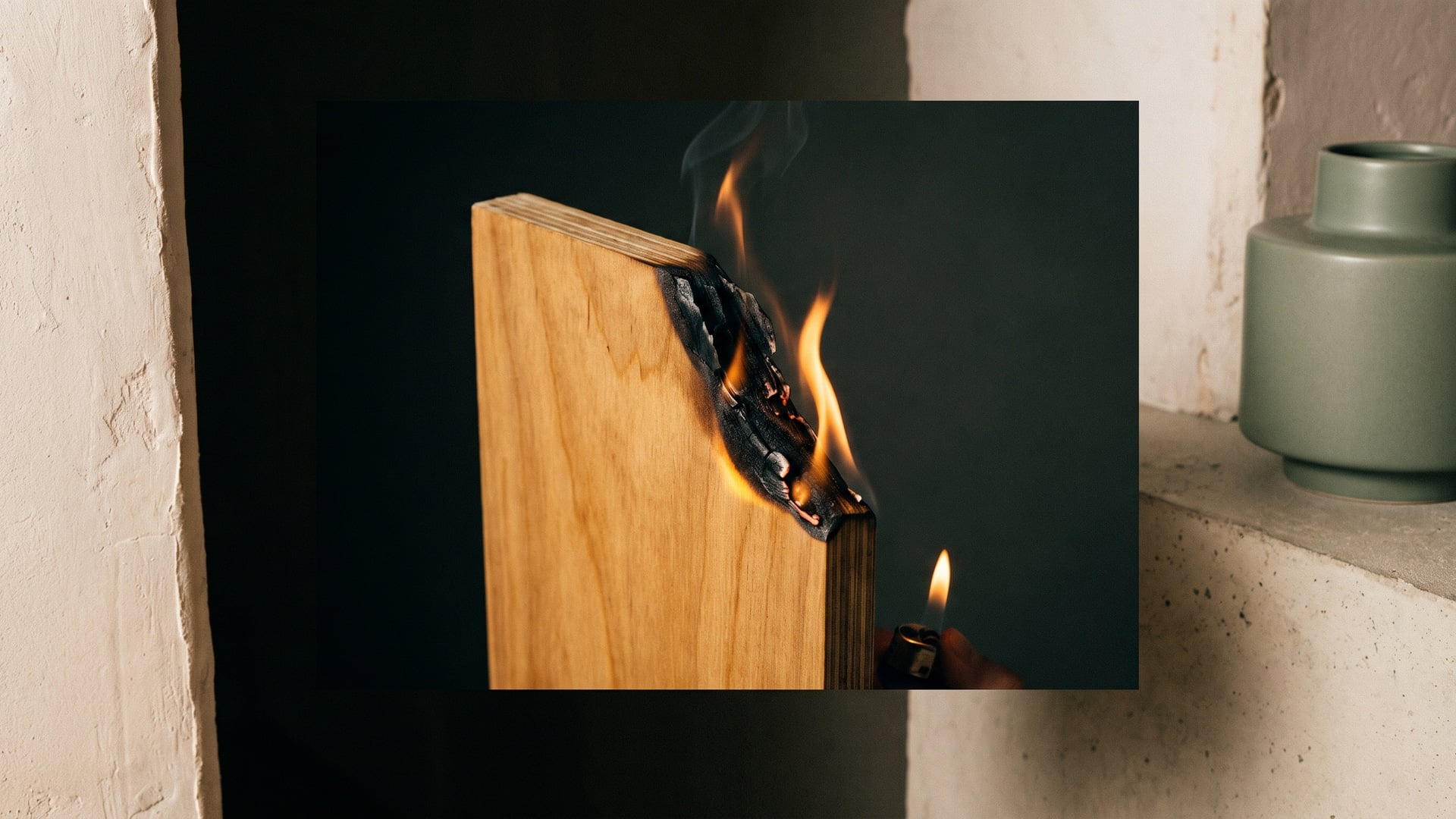
The rule is to fit the feature to the surface's real life. A child's study needs scratch and stain resistance far more than it needs high gloss; a worktop needs heat and stain resistance before it needs drama; a wardrobe in a dry bedroom needs little beyond a finish that hides fingerprints. And a fair caution: these are resistances, not immunities. Heat-resistant does not mean fireproof, and stain-resistant does not mean stain-proof — a trivet under the hot vessel and a prompt wipe of the spill still do their share.
What you should not skimp on
If a budget has to give somewhere, it should not give on either of these two things, because both fail in ways that are expensive and plainly visible.
The first is thickness on horizontal surfaces. A vertical face carries almost nothing but its own good looks, so a standard sheet is fine; a worktop or a desk carries the whole working life of the room, and a sheet that is too thin there wears through at the busy spots, chips at the edges and shows every knock. Value-engineering a worktop down to wardrobe thickness is the most common way to buy a surface that looks tired within a couple of years.
The second, and the one most people underrate, is the adhesive and the bonding. Here is the single most useful thing in this guide: most of what gets called “laminate failure” is not the laminate failing at all — it is the glue joint failing. Bubbling in the middle of a shutter, an edge that lifts and catches your sleeve, a corner that peels after a warm month: in almost every case the sheet is sound and the bond beneath it let go. In India laminate is very often pressed onto the panel by the carpenter on site, so the result depends entirely on the care taken there:
- Choose a proper adhesive suited to the surface — a good synthetic-rubber contact adhesive for most work, and a waterproof adhesive anywhere near water.
- Insist on an even spread on both faces and the correct open time before the two are brought together — rushing this traps the bubbles that surface weeks later.
- Press the whole area down firmly and evenly, right into the corners, rather than just smoothing the middle by hand.
- Seal and edge-band every exposed edge, because a laminate lifts from its edges first, and an open edge in a damp kitchen is where the trouble starts.
None of this shows in the sample book, and all of it decides whether the surface lasts. Honest pricing helps you think clearly here: because we hold One India · One Price, the same sheet costs the same in Kochi or Kanpur, so the energy that might have gone into haggling is better spent making sure the fitting is done properly — the part that actually determines how long the laminate stays put.
A buyer's checklist
Reduced to what you can actually carry to the counter and the carpenter, the whole decision runs like this:
- Name the surface's job first — is it vertical or horizontal, dry or wet, indoors or exposed? Everything else follows from that answer.
- Match the thickness to the duty — about 1 mm for vertical shutters and panelling, 1.5 mm and above for worktops and desks, compact or exterior grade for wet and outdoor work.
- Choose the finish for touch and light, not only colour — matte and super-matte to hide marks, gloss where you want drama and will keep it wiped, textured or synchronised for believable woodgrain, anti-fingerprint on dark handle-free fronts.
- Fit one or two performance features to the real use — scratch and stain for a child's desk, heat and stain for a worktop, UV for anything sunlit — and don't pay for the rest.
- Confirm it is HPL to IS:2046 in the thickness and grade you asked for, not merely something that looks similar.
- Specify the balancing laminate on the reverse of every faced panel so it stays flat.
- Agree the adhesive and the edge-sealing before work starts — this is where the surface is won or lost.
- Keep a labelled offcut of each laminate for future repairs and matching; you will be grateful for it years later.
Choose for the job first, the look second
The sample book sells you the look, and the look matters — it is what you will see every day. But the cabinet lives the job, and the job is what decides whether the surface you loved in the booklet is the surface you still love after five years of cooking, cleaning, homework and monsoon damp. Almost every laminate that disappoints was chosen the wrong way round: picked for its colour, then asked to do work it was never built for — a vertical-weight sheet on a worktop, a gloss in a house full of hands, a beautiful chip pressed down with careless glue.
So make the decision in order. Settle what the surface must do first — stand or lie, stay dry or meet water, take knives or just take glances — and let that fix the thickness, the performance and the way it is bonded. Then, and only then, choose the colour and finish you like best from the sheets that qualify. Get that order right and the two things stop competing: the laminate that does its job well turns out to be, quietly, the one that still looks the way you hoped for far longer than the one chosen on looks alone.