Plywood is one of the few materials in a home that you buy once and then live with for decades. It disappears the moment it goes to work — behind the laminate, inside the wardrobe carcass, under the kitchen counter, within the shutter of a door — and precisely because it disappears, it is the easiest thing to get wrong and the hardest to put right. You cannot re-buy the core of a wardrobe once the laminate is pressed and the hinges are drilled. The panel you choose in fifteen distracted minutes at a dealer’s counter is the one your family will open, close and lean on ten thousand times over the next twenty years.
The good news is that the difference between a board that lasts a lifetime and one that swells, warps and delaminates in its first monsoon is almost always visible before you pay for it — in the edge, the weight, the sound, the stamp and the paperwork, none of which needs a laboratory. It needs only that you slow down, ask the right questions, and refuse to skip a line. What follows is the checklist we would want our own family to carry to the counter: the checks that separate a genuine, certified panel from a cheap one dressed up to look like it.
Start with the room, not the board
Before you compare brands or haggle over a quote, decide what the panel actually has to survive. Plywood is graded by the glue that holds its veneers together, and that glue is the whole difference between a board that shrugs off water and one that quietly drinks it in.
- MR grade (Moisture Resistant), certified to IS:303. Bonded with urea-formaldehyde resin and built for dry interiors — wardrobes, bookshelves, TV units, box beds, partitions and false ceilings in rooms that stay dry. MR resists the humidity in the air; it does not survive standing water. Keep it well away from the sink.
- BWR grade (Boiling Water Resistant), also under IS:303. A tougher bond for spaces that see the occasional splash — utility corners, crockery units, and furniture living in coastal humidity.
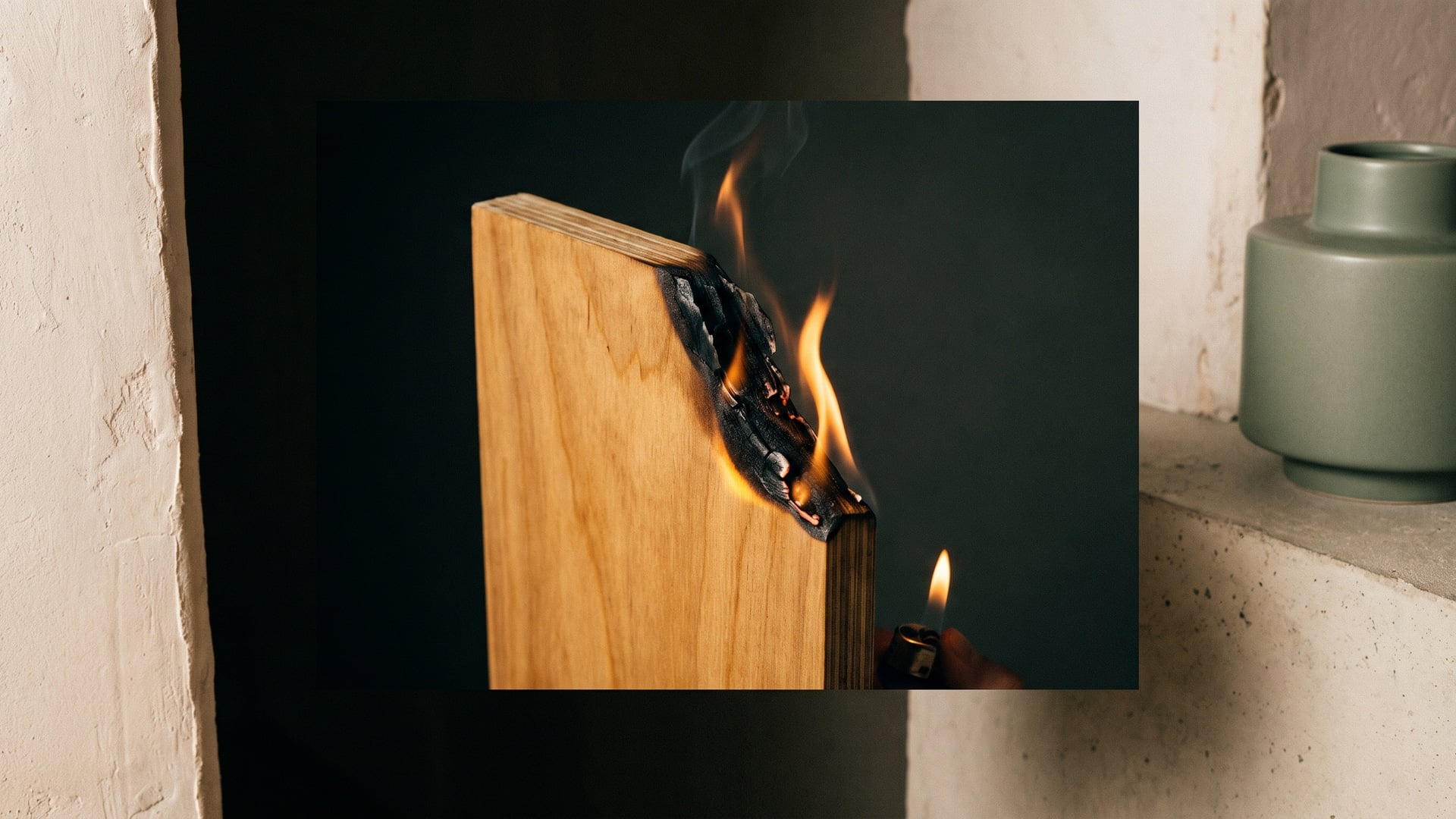
- BWP or Marine grade (Boiling Water Proof), certified to IS:710. Bonded with phenol-formaldehyde resin — the glue that does not let go when it gets wet. This is the grade for kitchens, bathrooms and washbasin counters, for anything structural or load-bearing, and for any furniture that must live through Indian monsoons year after year. Marine ply is the highest wet grade of all.
The rule is simple: MR for dry, BWP or marine for wet and for anything that carries weight. When unsure, go up a grade, not down — the price gap between grades is small; the cost of choosing wrong is the whole piece of furniture built on top.
Certification is the whole game
A grade name printed on a sheet means nothing on its own. What matters is that an independent standard stands behind it, and in India that standard is the Bureau of Indian Standards. The proof is the ISI mark — but only a genuine one.
- Look for the ISI mark on the panel itself, stamped or printed into the board, not merely on a paper label that can be peeled off and swapped.
- Confirm it carries the correct IS number for the grade: IS:710 for BWP and marine, IS:303 for MR and BWR.
- Find the CM/L licence number. A genuine ISI mark always carries one. Note it down — you can check that licence against the BIS register from your phone at the counter.
- Be wary of a mark with no number, a blurred or crooked stamp, or an IS number that does not match the grade you were quoted.
Counterfeit stamping is the oldest trick in this trade. A real manufacturer earns the mark through regular independent testing — including the punishing boiling-water and mechanical tests that IS:710 demands — and prints it with a licence number. If the certification is vague, walk away: nothing else on this list can save a board that was never truly certified.
The five-second edge test
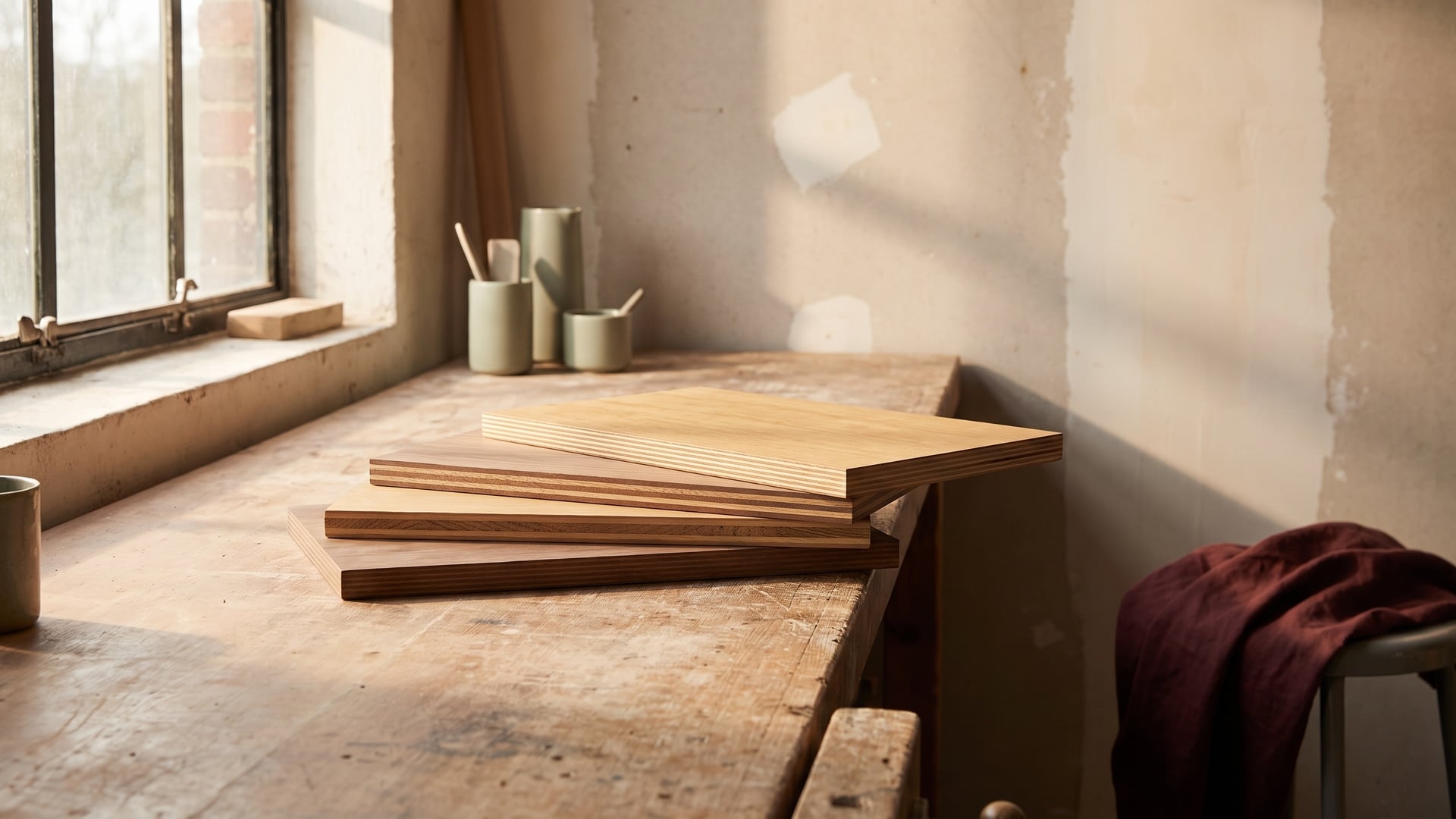
Now pick up a sheet and look hard at its cut edge — the cross-section where every layer is laid bare. This single view tells you more than any brochure ever will.
- Count the plies. Genuine plywood has an odd number of veneers laid at right angles to one another and symmetric about the centre.
- Check the core is full hardwood. The inner veneers should be dense, tight and uniform in colour, with no pale, spongy softwood filler smuggled into the middle.
- Look for gaps. Hollows, splits or air pockets between the core veneers are the real enemy — they trap moisture, weaken the panel and give screws nothing to bite into.
- Look for overlaps. Veneers that double over one another create ridges and uneven thickness that will telegraph through the laminate months later.
- Read the glue lines. They should be thin, continuous and even along the whole edge, with no starved or gappy stretches.
A clean edge — tight, gap-free, evenly layered and full of dark hardwood — is the single best sign of an honest board, and you can read it in five seconds.
The tap, the lift and the tape measure
Three more checks, none of which needs anything more than your hands and a measuring tool.
- The tap. Rap your knuckles across the face of the sheet, moving corner to corner. A solid board answers with an even, firm sound everywhere. Dead or hollow patches mean core gaps or a bond that never took. Listen for the change, not the note.
- The lift. Pick the sheet up. Genuine hardwood BWP is honestly heavy for its size, because both a dense core and a proper load of resin add real weight. A board that feels suspiciously light is telling you it is hollow, under-built, or padded with softwood. Between two sheets of the same size and grade, the heavier one is almost always the better — weight is your proxy for screw-holding, warp resistance, and how much real wood is inside.
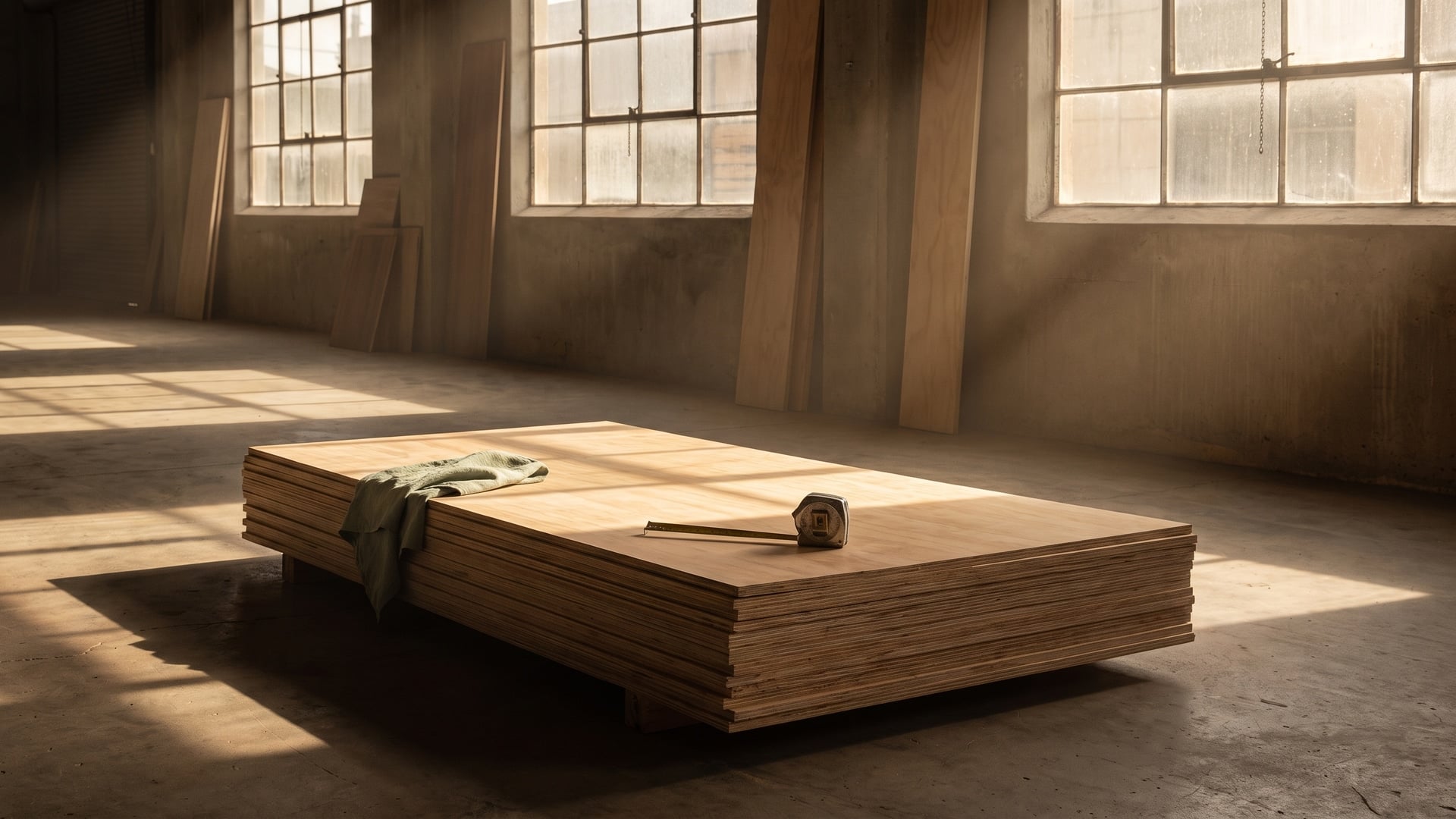
- The tape measure. Carry a tape or, better, a vernier gauge, and measure the thickness at all four corners and the centre. A calibrated board is uniform to a fraction of a millimetre corner to corner; variation means the veneers were never sanded flat, and the panel will sit unevenly, opening gaps at joints and throwing doors out of alignment. Confirm too that the nominal size is honest — a 19 mm sheet should measure close to 19 mm, not creep down to 17.5.
Get the guarantee, and the paperwork, in writing
A confident manufacturer stands behind the board on paper. Before you pay, ask for it — and keep it.
- Ask for the written warranty and read what it actually covers. It should protect against manufacturing defects, delamination, and attack by borer and termite — the three ways plywood tends to fail in Indian conditions.
- Take a proper GST invoice from the dealer, with the brand, grade, IS number and quantity written correctly.
- Record the batch or production code stamped on the sheets and keep it with the invoice. That code ties your panels to a specific production run; without it, a warranty is hard to claim and authenticity is impossible to prove.
- Keep it all together. A warranty you cannot find is a warranty you do not have.
You will rarely need to make a claim on a genuine, certified board. But a manufacturer willing to guarantee its panel against termite, borer and delamination is one confident in its glue and its wood — the paperwork is a signal as much as a safeguard.
Why the cheapest board is the most expensive
It is tempting to treat plywood as a commodity and simply buy the lowest quote on the counter. It is also the single most expensive mistake on this list.
Look at everything that sits on top of the board. By the time a wardrobe is finished, the plywood is a small fraction of the total — the laminate, the edge-banding, the hinges and channels and the carpenter’s labour all cost far more than the core. When a cheap board swells in the monsoon, bows a shutter or delaminates behind the laminate, none of that is salvageable. You do not merely lose the panel; you lose everything built on it, and pay again to have it all redone.
Over ten years, the cheapest board is almost always the most expensive one you could have bought. A genuine certified panel costs a little more today and saves the entire piece of furniture tomorrow. Buy it as though you will never get to replace it — because, sealed inside finished furniture, you won’t.
Buy from an authorised dealer
Where you buy matters nearly as much as what you buy.
- Buy from an authorised dealer of the brand. Authorised counters carry genuine stock, honour the manufacturer’s warranty, and can be traced if something ever goes wrong.
- Be sceptical of steep, unusual discounts. Reputable manufacturers increasingly hold to a One India · One Price policy, so the genuine product costs broadly the same wherever you go. A price that looks too good to be true usually is — it tends to point to seconds, rejects, or counterfeit stamping.
- Remember that a fake ISI mark travels easiest through an unauthorised channel. The authorised dealer is your simplest protection against a duplicate board wearing a real board’s clothes.
Your printable counter checklist
These are the fifteen minutes that save you a decade. Take this list to the dealer and do not skip a line.
Before you go
- ☐ Decide the grade for each room: MR for dry interiors, BWP or marine for kitchens, baths, wet zones and structural work.
- ☐ Note the sizes and thicknesses you need for each job.
- ☐ Carry a tape or vernier gauge, and keep your phone handy to check the BIS licence.
At the counter
- ☐ Confirm the ISI mark is on the panel itself, with the right IS number — IS:710 for BWP, IS:303 for MR.
- ☐ Find the CM/L licence number and check it is present and legible.
- ☐ Read the edge: odd, symmetric plies; full dark hardwood core; no gaps, no overlaps; thin, even glue lines.
- ☐ Tap across the face, corner to corner — an even, solid sound with no hollow patches.
- ☐ Lift the sheet — honestly heavy for its size.
- ☐ Measure the thickness at all four corners and the centre — uniform, and true to the nominal size.
Before you pay
- ☐ Ask for the written warranty against delamination, borer and termite.
- ☐ Take a GST invoice with brand, grade and IS number recorded correctly.
- ☐ Note the batch or production code and keep it with the invoice.
- ☐ Confirm the dealer is authorised, and be wary of a price that seems too good to be true.
Buy certified, buy the right grade, don’t skip a line
Plywood rewards patience like few materials in a home. Everything that goes wrong with it — the swelling, the warping, the borer, the delamination that surfaces two monsoons later — is decided at the counter, in the minutes before money changes hands. You cannot fix the core once the laminate is on. You can only choose it well the first time.
So do the three things that matter most, every single time. Buy certified: a real ISI mark, the right IS number, a licence you can check. Buy the right grade for the room: MR where it stays dry, BWP or marine wherever water and weight are in play. And do not skip a line of the checks — the edge, the tap, the weight, the measure, the guarantee and the invoice. Fifteen honest minutes at the counter are the cheapest insurance you will ever buy on furniture that is meant to last a lifetime. Slow down, ask the questions, and choose the board as though you will live with it for twenty years. You will.