Ask for “veneer” at a timber market or a panel showroom and you may be shown two things that look alike, cost very differently, and behave differently over the life of a project. Both are thin leaves of real wood bonded to a stable substrate — plywood, MDF or blockboard — to lend a surface the warmth and depth of solid timber at a fraction of the weight, cost and movement. Yet beneath that single word sit two quite distinct materials: natural veneer, sliced straight from a log, and reconstituted veneer, engineered from fast-growing wood that has been dyed and re-formed. Confuse the two and you can end up paying a premium for character you never wanted, or feeling let down by a material that was never meant to surprise you.
This guide is written to remove that confusion before it reaches your site or your invoice. We will look at how each material is made, how each behaves, where each belongs, and what it costs to buy and to look after. The aim is not to crown a winner — there genuinely isn’t one — but to help you match the material to the surface, and to the story you want that surface to tell. Whether you are an architect specifying panelling for a lobby, a contractor pricing a large fit-out, or a homeowner choosing a single wardrobe shutter, the right answer is the one that suits the job in front of you.
One name, two very different materials
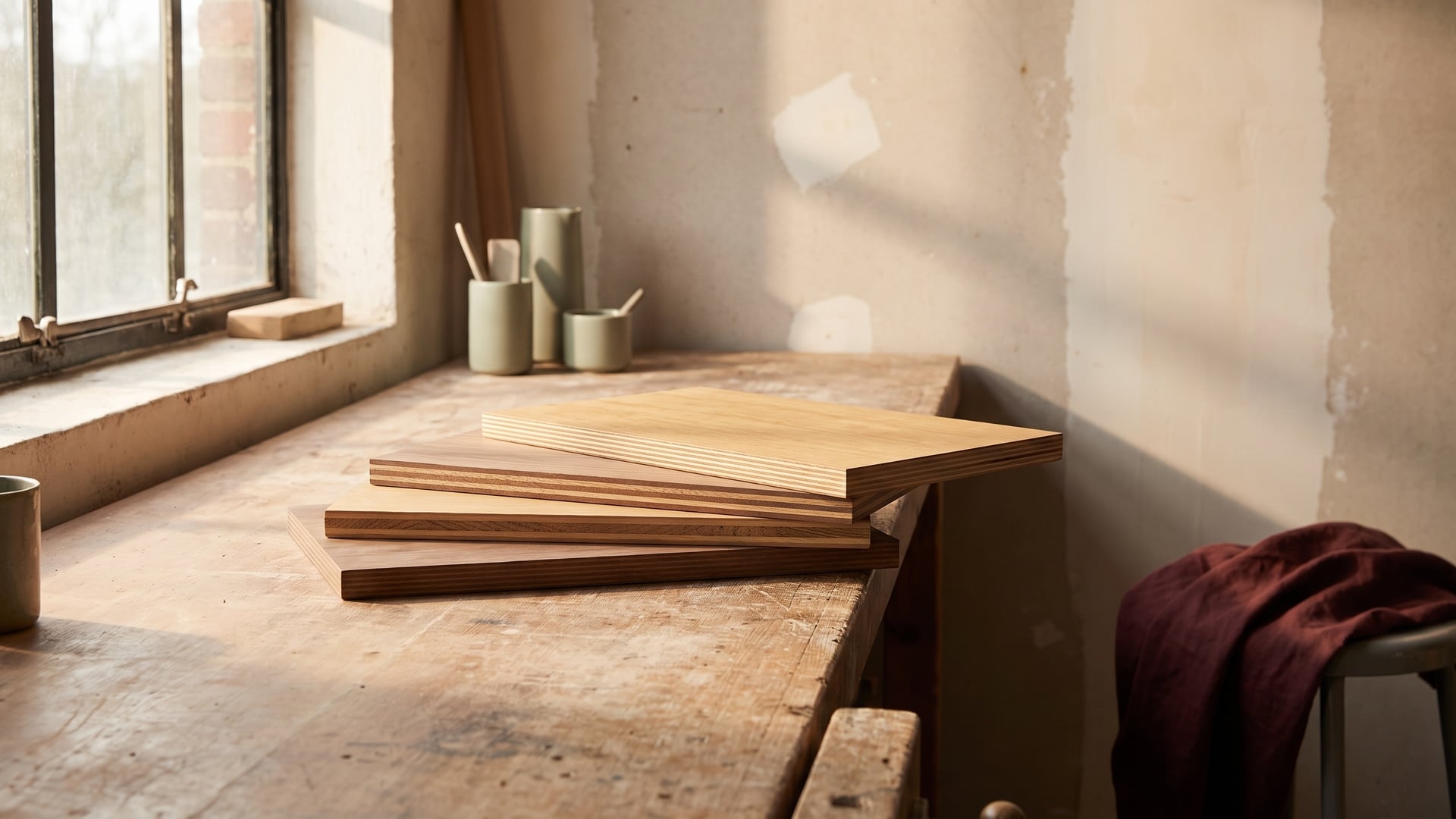
The reason a single word covers so much ground is that both products end the same way — as a wafer-thin leaf of timber, usually between 0.3 mm and 0.6 mm thick, pressed onto a board. What differs is where that leaf begins. Natural veneer is exactly what it sounds like: a real slice of a real tree, carrying whatever that tree happened to grow. Reconstituted veneer — also called engineered, composite or simply “recon” veneer — starts as real wood too, but is broken down and rebuilt to a recipe, so the leaf is designed rather than discovered.
That one difference in origin explains almost everything that follows: why one is unique and the other repeatable, why one asks you to plan around variation while the other lets you forget about it, and why the two can sit at surprisingly different price points even when they look similar under showroom lighting.
Natural veneer: the character of a single tree
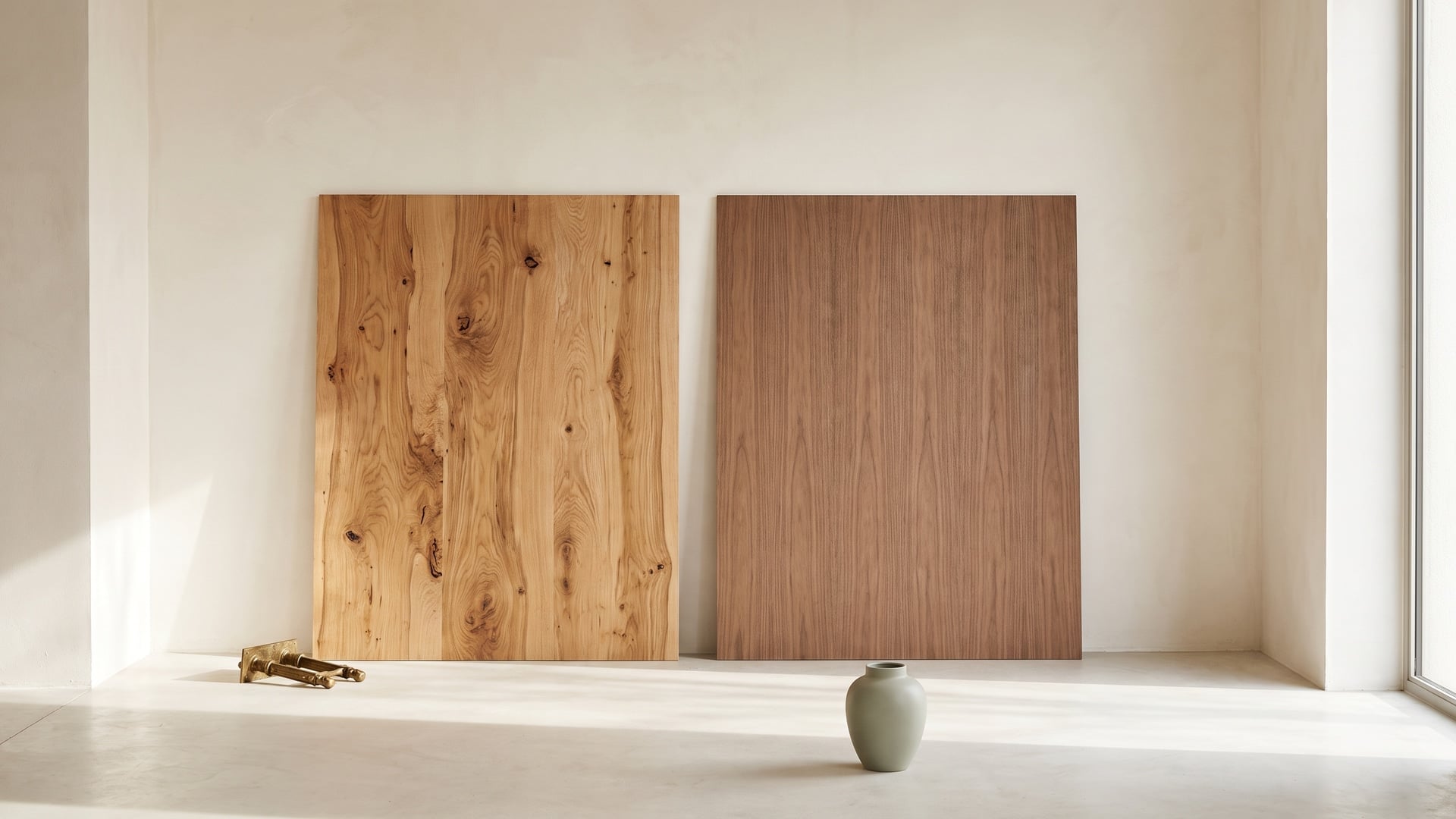
Natural veneer is sliced directly from a log. The timber is conditioned, mounted and shaved into leaves, which are then kept in the exact order they came off the log — a stacked bundle known as a flitch. Because every tree grows in response to its own soil, water, sunlight and age, no two leaves are truly identical and no two flitches ever match. Grain wanders, tightens and opens again; colour shifts between heartwood and sapwood; and features such as burl, figure, mineral streaks and the occasional small knot arrive as part of the deal. In species long loved in Indian homes and joinery — teak, Indian rosewood, walnut, oak and the like — this is precisely the appeal. It is unmistakably a piece of a tree, and it looks it.
That individuality is both a strength and a responsibility. Because the material varies, you plan around it rather than fight it: leaves from one flitch are laid side by side and mirrored so the grain flows across a run — the technique called book-matching — giving large panels a deliberate rhythm rather than a random patchwork. A few things are worth keeping in mind:
- No two sheets are the same. Order from a single flitch when you need panels to relate to one another, and order enough at the outset — a later top-up will not match.
- Colour and grain shift within a bundle. Sequence and match leaves for continuity across a wall, a run of shutters or a reception desk.
- Natural marks are features, not faults. Streaks, subtle colour change and fine figure are the signature of real timber; expecting perfect uniformity from it is the wrong expectation.
- It carries genuine depth. Under good light and a considered finish, natural veneer has a three-dimensional quality that is very hard to imitate.
Reconstituted veneer: consistency by design
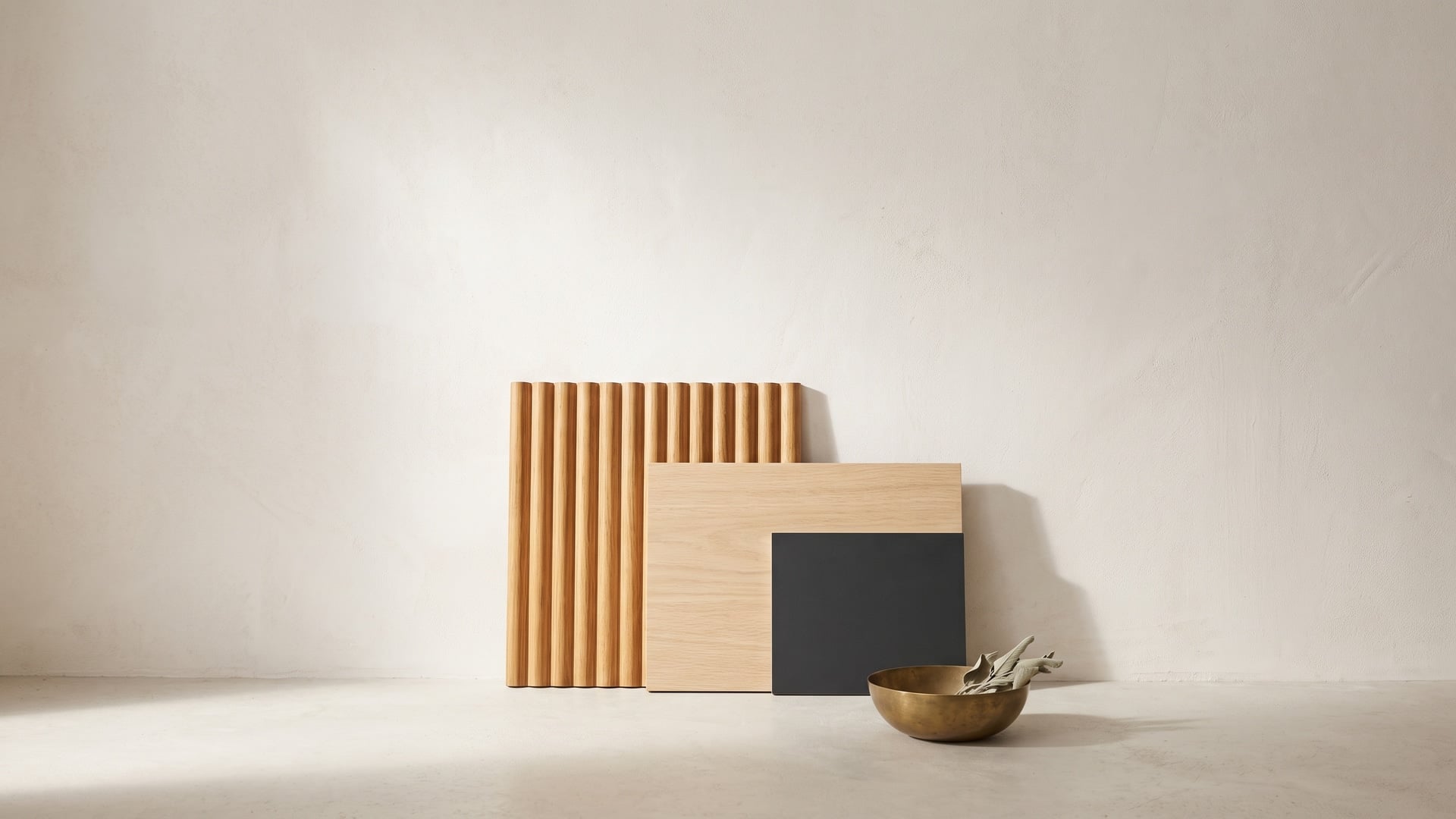
Reconstituted veneer takes a different road to the same wafer. Fast-growing, plantation-grown species — poplar and similar quick-maturing woods — are peeled into broad rotary sheets, dyed to a chosen colour, then bonded under pressure into a large moulded block. That block is sliced afresh, and because the grain has been laid down to a plan, every leaf reads much the same as the last. The result is a real-wood surface with a straight, even, repeatable grain, in colours ranging from faithful imitations of rarer timbers to clean, contemporary tones no single tree would produce.
The advantage is predictability at volume: if a project needs forty matching panels, or a colour that must read identically on the ground floor and the third, reconstituted veneer delivers it without the hunt for a large-enough flitch. It also sits more comfortably with sustainability goals, being built from fast-growing species rather than slow-maturing hardwoods and using the log more fully. In short:
- Grain and colour stay consistent across large quantities and repeat orders, which makes matching and future replacement far simpler.
- It is engineered to a specification, so what you approve on a sample is what arrives on site.
- It often draws on fast-growing, plantation species, an easier fit where responsible sourcing is part of the brief.
- It offers colours nature doesn’t, including clean uniform greys and warm even browns suited to modern, minimal interiors.
Comparing the two at a glance
Set side by side, the trade-off is about character versus control — not compromise, but answers to different questions.
- Natural veneer — unique character, genuine depth, a premium hand and feel. Every sheet is one of a kind, ideal for feature surfaces where the material itself is the point. In return it asks for planning, sequencing and a little tolerance for variation.
- Reconstituted veneer — predictable, uniform, repeatable at scale. Grain and colour hold steady across a large or long-running job, and re-ordering is straightforward. In return, you give up the one-off individuality of a single tree.
How to choose for your project
The clearest way to decide is to ask what a surface has to do. A one-of-a-kind hero surface — a boardroom table top, a headboard wall, a statement reception, a single fine cabinet in a quiet home — is where natural veneer earns its place: variation is a virtue, quantities are modest, and the irregular grain of a real tree is exactly the character you are paying for.
Many matching panels across a big project, on a controlled budget, point just as clearly to reconstituted veneer — a retail chain that must look identical city to city, a hotel with a hundred wardrobe shutters, an office where every meeting room should read the same. Here consistency is not a limitation but the whole requirement, and being able to re-order the same colour and grain months later, when a damaged panel needs replacing, can matter more than individual character.
Sealing, finishing and care make both last
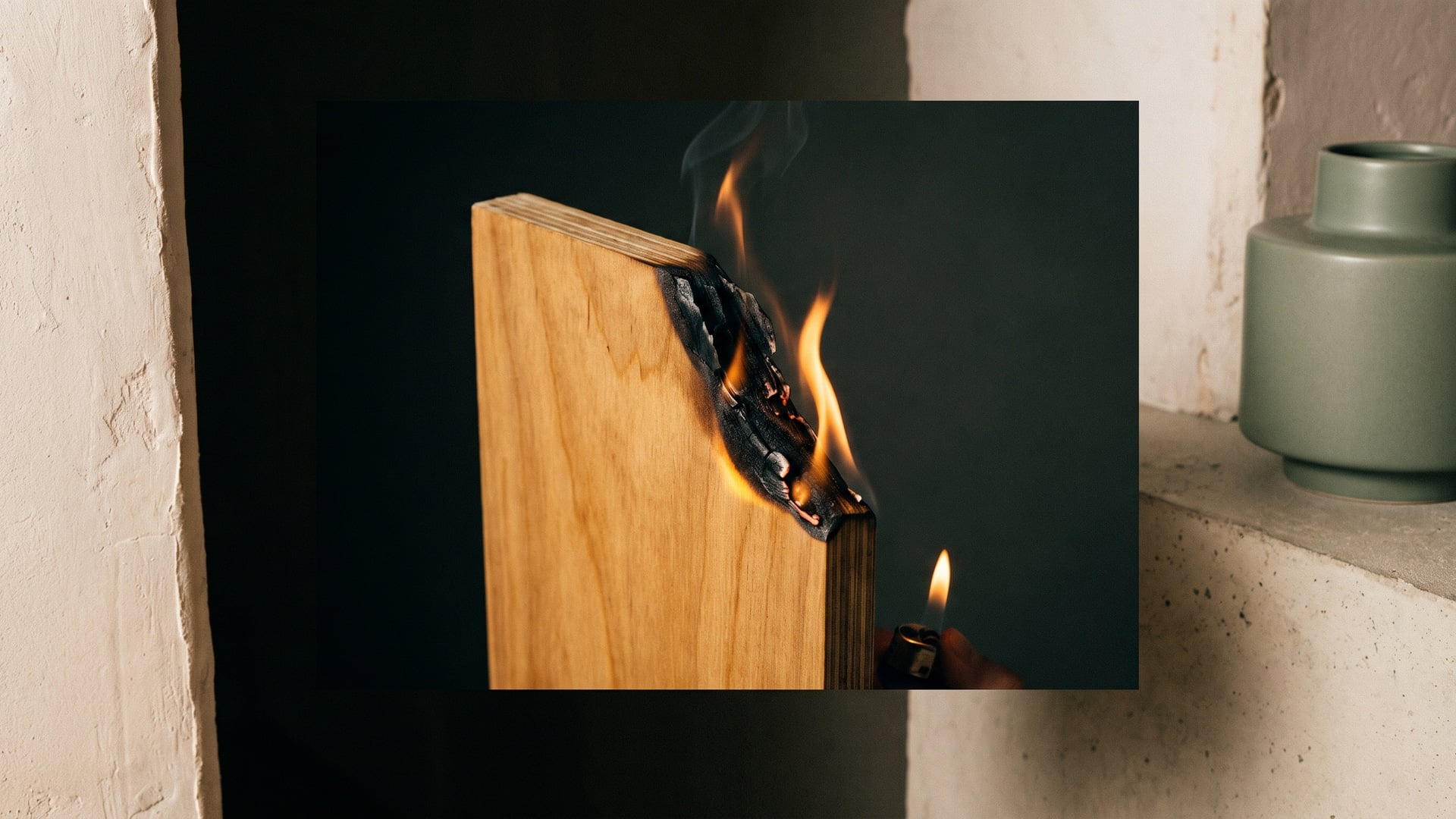
Whichever you choose, remember that a veneer is real wood, and a very thin layer of it. It behaves like timber — responding to moisture, heat and sunlight — so the finish is not a cosmetic afterthought but what protects the surface for the decades it should last. This matters especially in Indian conditions, where a long humid monsoon and strong direct sun both test any wooden surface. A well-sealed veneer shrugs these off; an unsealed one will not.
- Seal every face. A quality lacquer, melamine or PU finish guards against moisture ingress, everyday stains and abrasion. Matt, satin and gloss are all available — a lower sheen tends to flatter natural grain, while a clean satin suits the uniformity of reconstituted.
- Mind the sun. All real wood mellows with light over time; natural veneer will shift more visibly, reconstituted more evenly. Where a surface faces strong daylight, plan for it rather than be surprised by it.
- Keep it simple in use. Wipe with a soft, slightly damp cloth, avoid harsh chemicals and standing water, and refresh the topcoat if a heavily used surface begins to look tired — the veneer beneath will still be sound.
- Respect the thinness. A veneer cannot be sanded back like solid timber, so protect edges and high-wear zones from the start with sensible detailing.
Treated this way, both materials comfortably serve for decades. The difference in origin does not translate into a difference in durability — that is decided almost entirely by the finish and the care.
What it costs, and what moves the price
Cost is where the two part company most visibly, though not always in the direction people assume. Natural veneer is priced by the tree: common, widely available species sit at the accessible end, while rare timbers, dramatic figure and large well-matched flitches command a real premium. There is also hidden cost in the matching itself — sequencing leaves and accepting some wastage to keep a run continuous adds to both material and labour. Reconstituted veneer, made to a recipe, tends to be more even in price and more economical across large areas, with less wastage and no scramble to find a flitch big enough for the job.
The honest way to compare is on the finished, installed surface rather than the sticker on a single sheet. Factor in wastage, the labour of matching, the substrate, the finish and the likelihood of future re-ordering. A modest quantity of striking natural veneer on a feature wall may cost less in total than you feared; a large run of it, matched and sequenced across a whole floor, will cost considerably more than the reconstituted alternative that would have read just as cleanly. Let the surface’s job, not a per-sheet figure, lead the decision.
A quick decision guide
When you are standing over a sample and need to commit, these prompts usually settle it:
- Choose natural veneer when the surface is a one-off hero piece; when unique grain and genuine character are the point; when quantities are modest; and when you and the client welcome the individuality of a real tree and will plan for its variation.
- Choose reconstituted veneer when you need many panels to match; when the run is large or spread across time and locations; when the budget must stay controlled and predictable; when future replacement should be effortless; or when a fast-growing, plantation-sourced material better suits the brief.
- Consider both together when a project has both roles to fill — natural on the feature surfaces that define a space, reconstituted on the broad repeated runs that surround them.
- Whichever you pick, confirm the substrate, agree the finish, order natural veneer in one go from a single flitch, and keep a spare panel of reconstituted for later repairs.
The right fit, not the better material
There is no better veneer here, only the better fit. Natural veneer offers the irreplaceable character of a single tree — unrepeatable, full of depth, ideal wherever the material itself is meant to be admired. Reconstituted veneer offers calm, dependable uniformity at scale — the right hand on the shoulder of a large project that simply needs to be right everywhere at once. One is a discovery; the other is a decision. Both are real wood, and both will serve beautifully for decades if they are sealed and cared for.
So before you compare prices, ask what the surface is for. Is it a piece you want people to notice and touch, or a run you want to disappear reliably into a larger whole? Answer that honestly and the choice between natural and reconstituted usually makes itself — and you end up paying for exactly the quality you wanted, on exactly the surface that needed it. As a manufacturer, that is the outcome we would always rather see than a premium spent, or a compromise made, for want of one straightforward question.