Every interior budget, however generous it looked on the spreadsheet, runs out before the wish-list does. There is always one more wall you wanted panelled, a worktop you wanted upgraded, a wardrobe you wanted a little deeper. So the real question in fitting out a home is never whether to economise — everyone does — but where. The same sum of money, spent two different ways, produces two very different homes — and the difference lies far less in how much was spent than in where it was concentrated.
Spread evenly and thinly, a budget buys a home that photographs well on handover day and then quietly wears out: the sink cabinet swells in its second monsoon, the worktop dulls where hands rest, and the veneer that was meant to be the centrepiece turns out to be the same tired grade as the shoe rack. Concentrated where it counts, the very same money buys a home that feels considered and lasts — because the surfaces that take punishment were built to take it, and the ones nobody sees were allowed to be ordinary. This guide is about that concentration: the surfaces worth upgrading, the ones where standard is the smart choice, and the false economies that undo an otherwise careful plan.
The trade-off no budget escapes
Two plain questions sort almost every surface in a home, and asking them honestly is most of the work. First: what will this surface have to endure — standing water, heat and steam, real weight, the constant friction of hands? Second: will anyone ever see or touch it? A surface that meets both daily punishment and daily contact has the strongest claim on the budget. A panel sealed inside a dry cabinet, bearing load but never a glance, has almost none.
Map those two questions across a home and the money organises itself. Invest where endurance and contact overlap — the wet-zone cores that fail expensively, and the worktops and fronts your hands meet every day. Choose standard where a surface carries structure while meeting neither water nor an audience. Most budget mistakes are simply a failure to ask: money spent on show where there is no wear, and saved on wear where it is hidden.
Invest first: the wet-zone cores
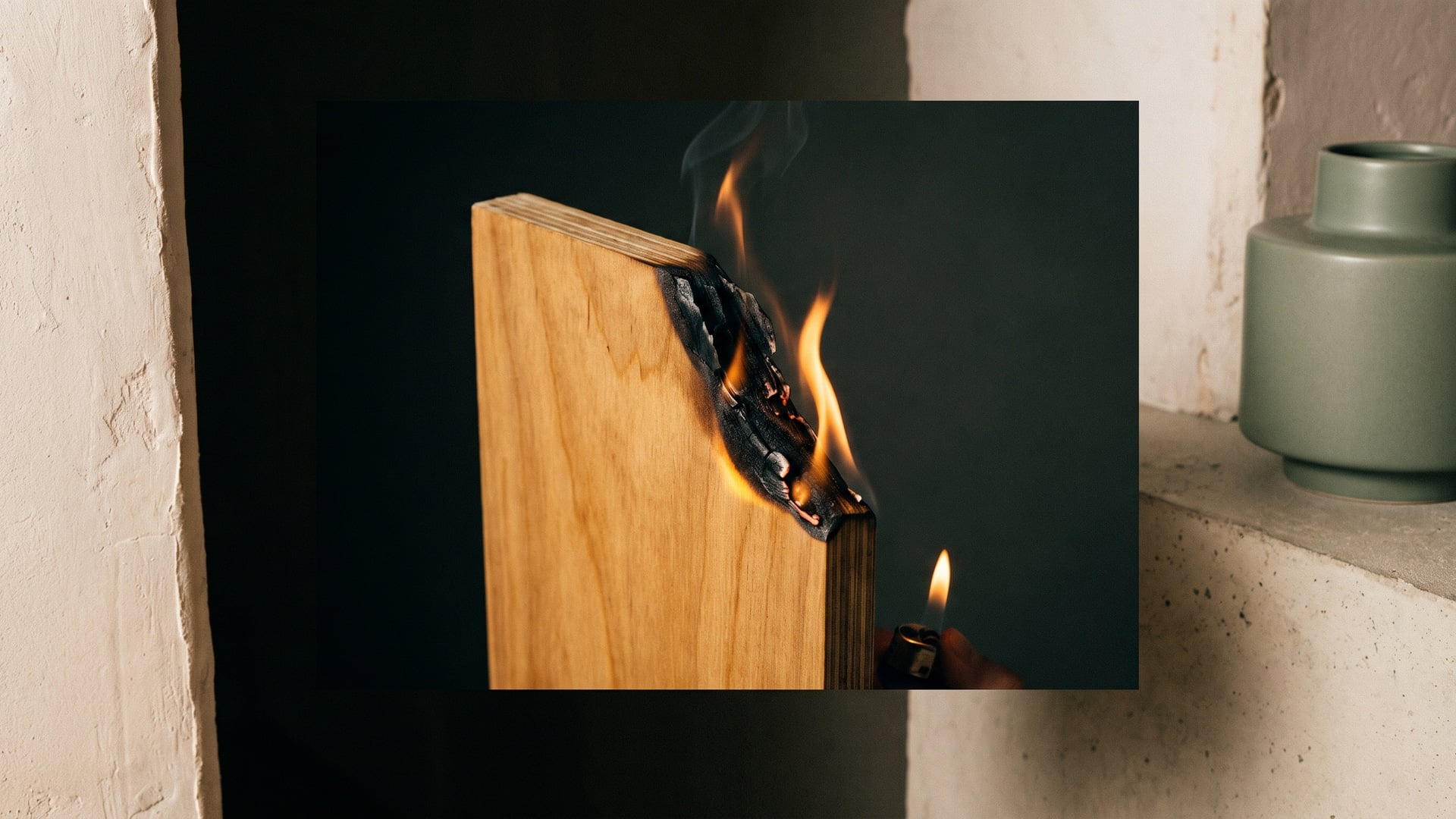
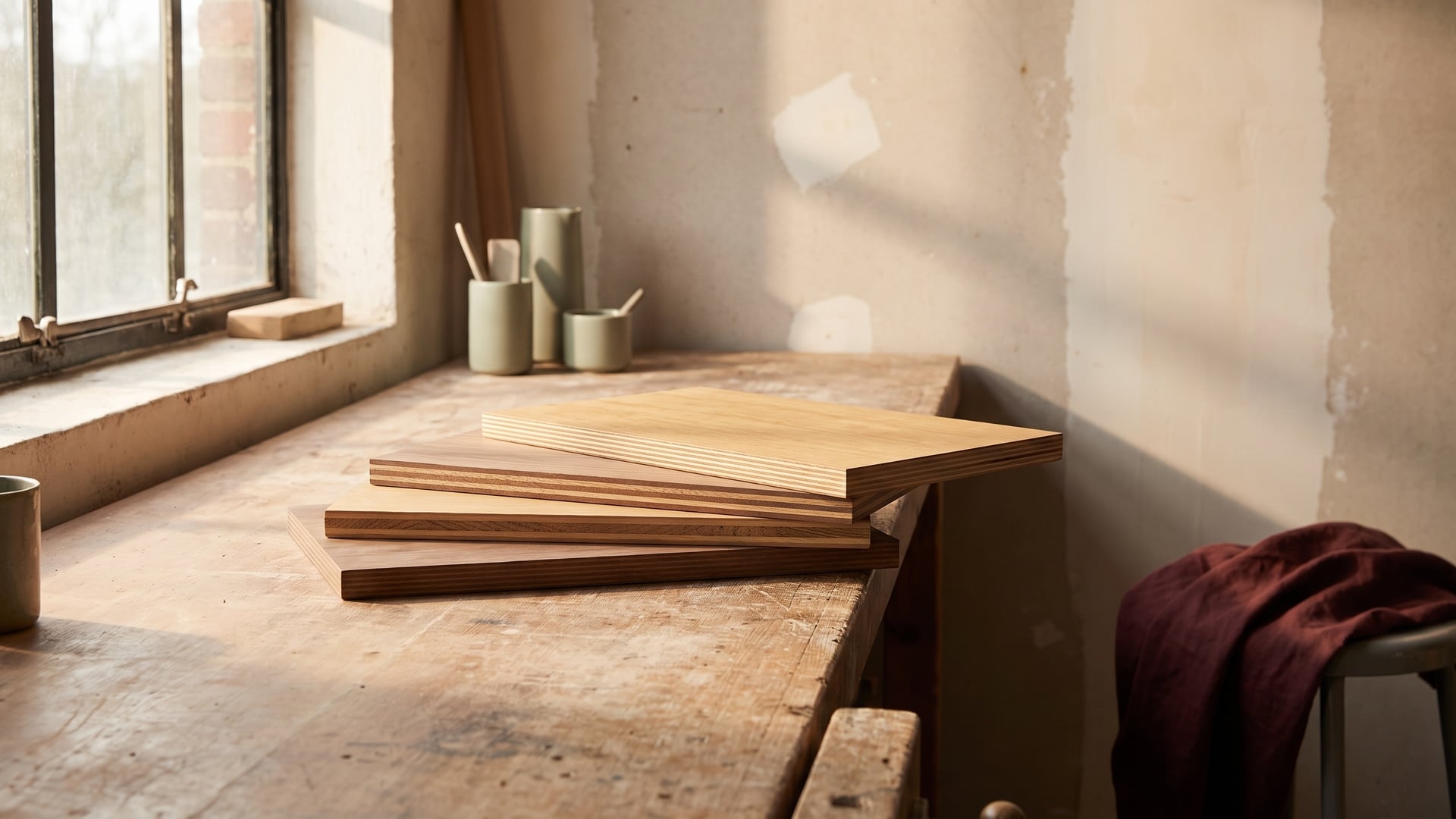
If a budget can protect only one thing, it should protect the places water lives — the kitchen and the bathroom. These are the surfaces that fail first and cost the most to put right, because failure here is not a scratch you learn to live with but a swollen, delaminating carcass that drags its hinges down and takes the whole run with it. The core of every base and sink-adjacent cabinet, every bathroom vanity, and every utility and wash-area unit should be BWP marine-grade plywood (IS:710), phenolic-bonded to survive standing damp, splashing and months of monsoon humidity without letting go.
Investing here buys survival, not show. Much of this plywood hides behind shutters and tiling; you are paying for the resin and the tighter build, not for anything the eye will admire. That is exactly why it is the one line with no sensible economy. Everywhere else in this guide there is a case for restraint; the wet-zone core is where restraint becomes a liability, because the cost of under-building it is measured in whole cabinets, not in rupees per sheet.
Invest in the surfaces you touch every day
After the cores, the next claim on the budget is everything your hands actually meet. A worktop is used, wiped and leaned on more than any other surface in the house; a wardrobe front is opened thousands of times a year; a vanity top lives with water and a daily wipe-down. On these, the gap between a standard and a premium surface is neither subtle nor hidden — you feel it under your palm and watch it age. This is where a tougher laminate or a harder-wearing worktop earns its price, in the way it resists marks and the slowness with which it dulls. The surfaces that repay an upgrade:
- Kitchen worktops and splashbacks. The hardest-working surface in the home, meeting knives, heat, water and constant wiping. A durable, water-tolerant top here is felt every day and is punishing to replace once the units are built around it.
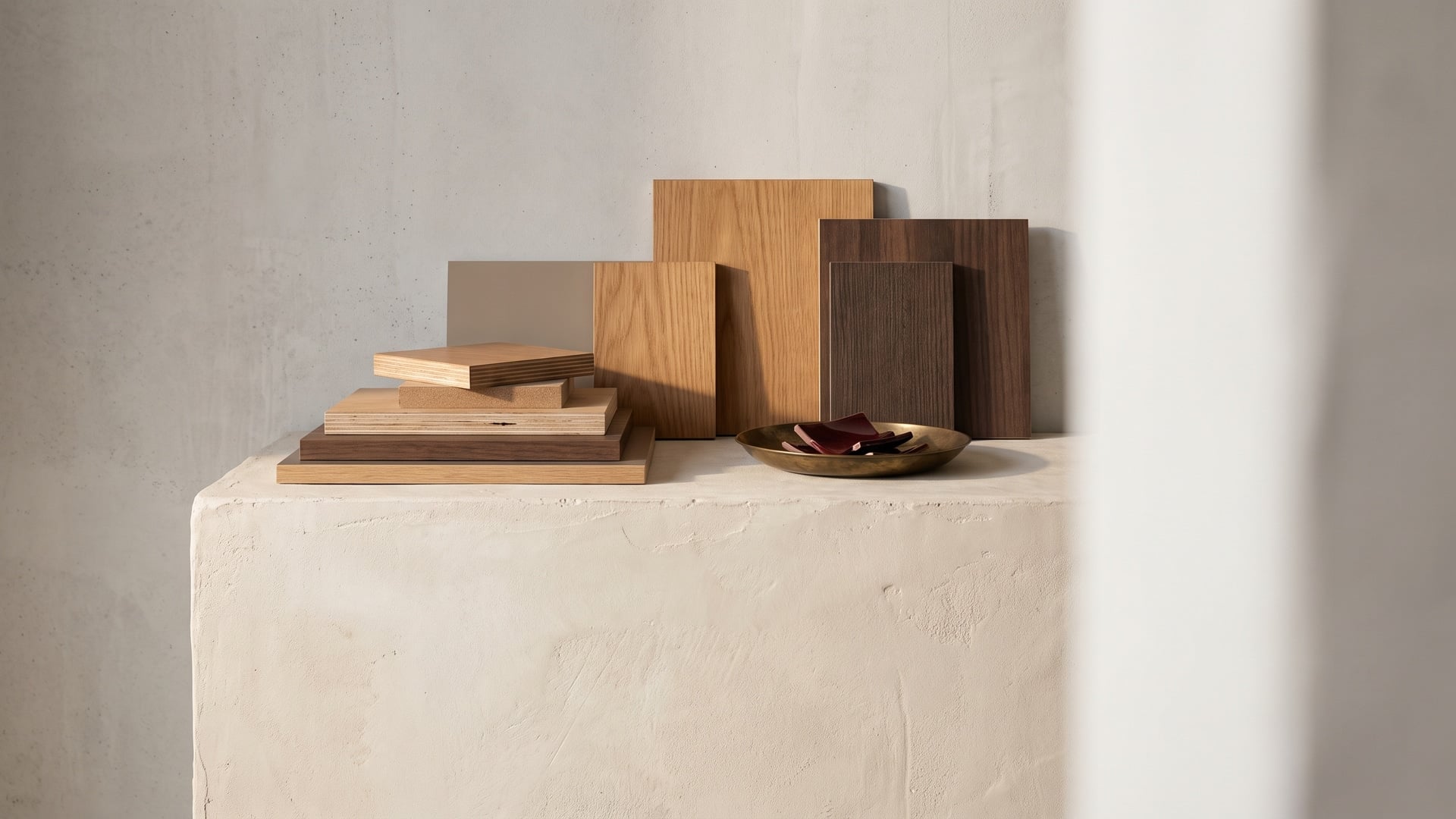
- Wardrobe and cabinet fronts. The faces you open daily and see constantly. A better laminate or veneer on the shutters — and a super-matte or anti-fingerprint finish where hands land — keeps a room looking composed long after a cheaper surface has gone patchy.
- Vanity tops and bathroom fronts. Water-facing and hand-facing at once, so a finish that tolerates constant damp and wiping is worth the upgrade.
- Handles, edges and edge-banding. Small in area, large in wear. A well-made edge that does not chip or lift is where daily use either shows or quietly does not.
Give the room one hero, not ten
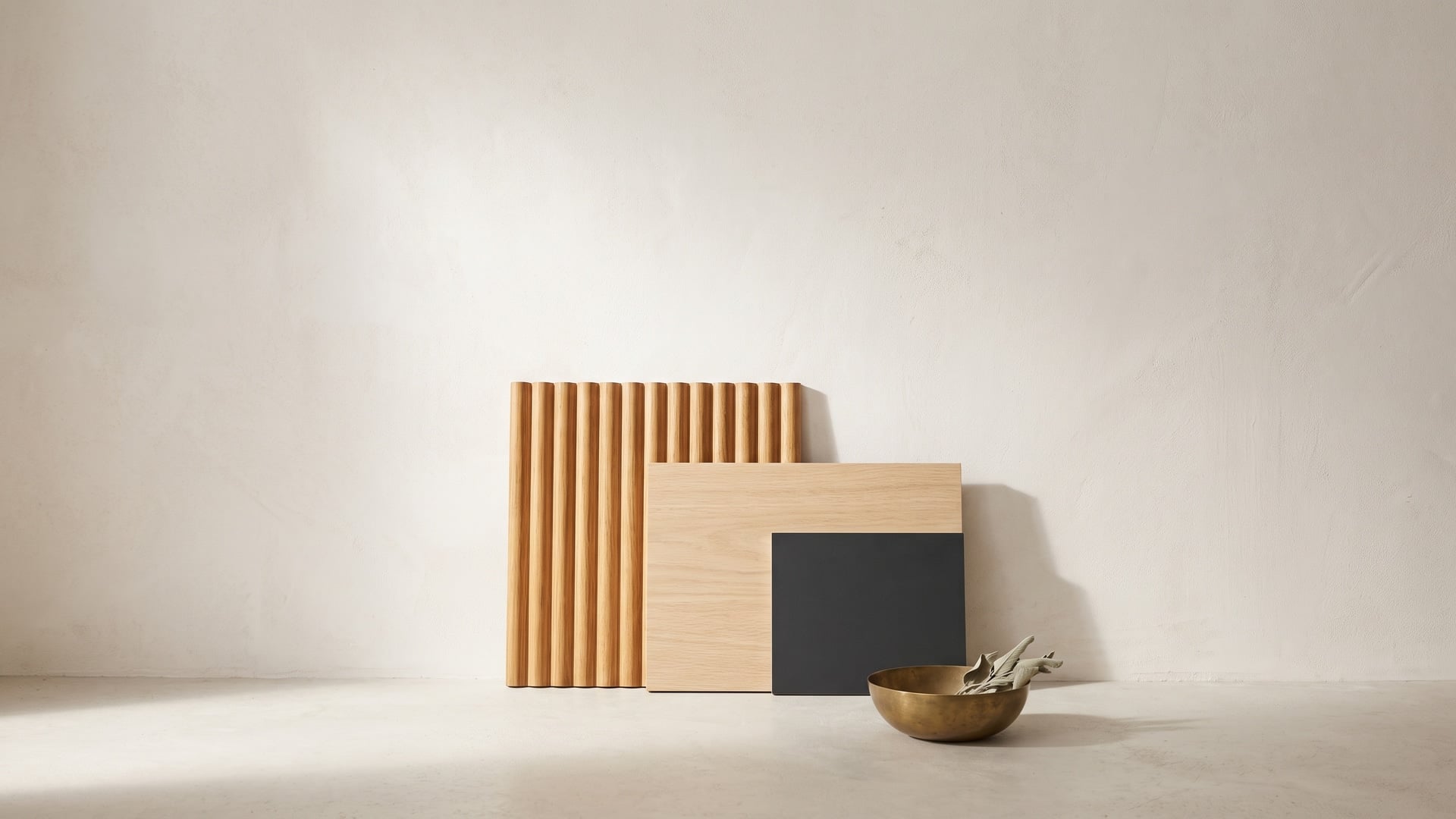
Every well-composed room has a single surface that sets its tone — a natural-veneer wall behind the bed, a run of fluted panelling, a kitchen island clad in real wood-grain, a door that announces the entrance. This is the one place to spend for effect rather than endurance, and the whole discipline lives in the word one. A hero works precisely because the surfaces around it are quiet; make everything a feature and nothing reads as one, only a room that is trying too hard in every direction.
Choosing a single element to carry the character — a genuine veneer, a statement laminate, a textured panel — and letting the rest support it is both better composition and better budgeting. One generous gesture costs a fraction of trying to make every surface remarkable, and lands harder for the restraint around it. Spend on the hero deliberately, put it where it will be seen and rarely abused, and let it do the work a dozen scattered upgrades never could.
Where standard is the smart money
Knowing where not to spend is as valuable as knowing where to. A large share of any home is structure that never meets water and never meets the eye, and here a standard specification is not a compromise but the correct answer. MR-grade plywood (IS:303) is a strong, stable, screw-friendly board that is entirely sufficient for dry interiors; reaching for marine grade where no water will ever test it buys performance the room cannot use. Economise with confidence on:
- Dry-area carcasses. The boxes of wardrobes, TV units, study and display cabinets in bedrooms and living rooms — sound MR-grade ply, adequately thick, is exactly right.
- Internal shelves and drawer boxes. The shelves, dividers and drawer interiors that carry clothes, books and files rather than water. They need to be square and solid, not premium.
- Backs, bottoms and unseen sides. The surfaces you pay for as structure, not as show. There is nothing to gain from a decorative-grade finish on a panel fixed to a wall.
- Loft and dry-storage panelling. Anything living in conditioned or naturally dry air, away from splashing and steam.
The single caveat is load: a weight-bearing loft or a long shelf needs thickness and proper support so it does not sag — but the grade itself can stay MR. Money saved here is not lost; it is freed, and it belongs in the cores and the surfaces that show.
The false economy that always comes back
The most expensive saving in any interior is the one made in a wet zone. Slipping an MR board under a sink to shave a little off the quotation saves a modest sum on fitting day and looks utterly identical — the two sheets are indistinguishable once the shutter is closed. The failure stays invisible until, a monsoon or two later, the base swells, the shutters stop aligning, the hinges lose their grip and a musty smell settles in. By then the fix is almost never a repair; it is ripping out and rebuilding the run, paying a second time for labour, hardware and finish.
That is the whole case in one example: a small sum saved at the counter, repaid several times over within a couple of seasons. It is why the wet-zone cores sit outside the negotiation altogether — not because more is always better, but because this is the precise surface where under-building costs the most. Cutting grade to save a little now is not thrift; it is a debt, and it comes due at the worst possible time.
Phasing a tight budget sensibly
When the number simply will not stretch to everything at once, the answer is not to thin every surface until all of them are mediocre. It is to phase — to do in full, now, everything that is permanent, hidden behind other work or exposed to water, and to defer only what can be added later without tearing anything out. A sound structure will happily receive better fronts, panelling and features months or years down the line; a failed wet-zone core cannot be improved without undoing the room around it. A workable order of spending:
- Do now, in full grade. Every wet-zone core, all plumbing-adjacent cabinetry, and anything that will be sealed behind tiling, flooring or fixed joinery. These are ruinous to revisit.
- Do now, sound but plain. The carcasses and internals of dry-room furniture, built solid in MR grade and ready to take upgraded fronts and finishes later.
- Defer safely. The hero feature wall, decorative panelling, open shelving, better shutter finishes and loose furniture — all of which can be layered in over time without disturbing what is already fixed.
Phasing this way also lets honest pricing work in your favour. With One India · One Price, the sheet you defer costs the same when you return to it as it does today, and the same in one city as the next, so a plan made this year still holds next year. Build the structure now and the show later, on numbers you can rely on.
A room-by-room priority guide
Reduced to rooms, the same logic reads as a simple order of priority — where to invest, where standard is fine, and the one place worth a splurge:
- Kitchen. Invest in BWP cores for every base and sink-adjacent unit and in a hard-wearing worktop and splashback. Keep upper-unit carcasses and internal shelving standard. A clad island or a run of handleless fronts makes the natural hero.
- Bathroom. Invest in a BWP vanity core and a water-tolerant top and front. Almost everything here leans wet, so there is little room for standard beyond the internal dividers.
- Bedroom. Invest in the wardrobe fronts, finishes and handles you touch daily; keep the carcass, loft and internals in MR grade. One veneer or panelled wall behind the bed is the obvious hero.
- Living room. Invest in the feature or media wall that anchors the room and in the finish of any surface at hand height. Keep the media-unit carcass and shelving standard.
- Utility and wash areas. Treat as wet zones — BWP throughout the cores — and spend nothing on show, because nobody is looking. Durability is the only brief.
- Study and dry storage. Standard grade almost everywhere; invest only in the desk or worktop surface that takes daily use.
Spend on what lasts, and on what you touch
A home is not made good by spending everywhere. It is made good by spending in the right places and having the confidence to leave the rest ordinary. The two ideas worth carrying out of all this are simple. Spend on longevity — the wet-zone cores that fail first and cost most to redo, built in BWP grade with no compromise. And spend on daily life — the worktops, fronts and tops your hands meet every day, and one considered hero that sets the tone for the whole room.
Then economise, freely and without guilt, on the carcasses, backs and internals that carry weight but never water and never a glance. Match the grade to the exposure, put the finish where the wear and the eye actually are, and let everything hidden be honestly plain. Do that, and the same budget that would otherwise have bought a home which quietly wears out instead buys one that feels considered on the first day and holds its composure for years — through monsoon after monsoon, and the ordinary friction of being lived in.